Showing posts with label actingstudio. Show all posts

Friday, August 31, 2018

New York acting programs - Devin Fuller


The Maggie Flanigan Studio New York acting programs train actors based on the Meisner Technique, created by Sanford Meisner. Devin Fuller, a first year student in the acting program, talks about what he thought actor training was when he first started studying at the studio. Q: Devin, what did you think about to train as an actor before you started the two-year program at Maggie Flanigan Studio? A: I think when I was starting out I thought that actor training was something that you could do and was probably helpful, but I thought, “Not everyone necessarily needs to train because I've heard stories about people who become successful without going to training programs.” I thought for me, I could show up and learn on set, and I could learn from experience, but I think ultimately what I've learned is that there’s this level of technique that you don't necessarily get just from experience. It does help for someone to train you and to learn from somebody because you can only get so far, I think, on your own. It helps to have a teacher. Q: What did you think or what did you know about the Meisner Technique before you started your first year here? A: I had taken a couple of classes before that dabbled in Meisner, nothing super advanced though. All I knew about it was repetition involved. I didn't see the process too much beyond some fundamental things about it. All I knew was that I knew some people who had trained in the Meisner Technique and they were outstanding. I was like, “I want to learn what this is about,” so here I am. [laughs] Q: Now that you've finished the full first year of the two-year program, how has your understanding of the Meisner Technique changed? A: I've learned it’s very-- It lets you get into a part of yourself that you might not know you have. I feel like before when I didn't have as much of an understanding of technique; I would show up then think, "Okay, how would this character feel?" I didn't really-- It was not in a particular way. I just felt along and tried to see what works. A lot of times, maybe it did work, other times it didn't, I got feedback. Now that I've trained a little bit, I've learned that having some structure to how you're approaching acting is very helpful. This technique is good at getting you out of your head and focusing on what the other person is doing. It's less about yourself. I've learned so much about reacting to people and understanding and also letting my true emotional response come out. There is a difference between acting angry and being angry, acting sad and feeling sad. It's like night and day once you realize that. It's been a great experience, and I've learned a lot. Q: What did you learn about yourself this year that was a surprise or that changed you? A: In everyday life, you have to tamp down a lot of your emotions. You don't want to be angry, or at least I don't want to be mad at people. I don't want to show I'm agitated but doing this, it's like you realize you can access those parts of yourself and you can be excellent. Like when you're angry on set, you’re not acting angry, you want to get to a point when you feel mad. It’s all in a controlled experience but-- I mean controlled in the sense that it's safe, but it’s just this-- You let yourself live out these experiences. It feels so rewarding to let yourself go to that place. It's so much more-- I think you get these rush of being like, “Wow, I did that. I let it myself get angry. I let myself cry. I let myself break down.” It’s fantastic, and you feel so much better. You feel like such a better actor after letting yourself go to those places instead of just faking it. Q: How is being part of the two-year program different from your experience at other studios or in other classes? A: Two-year program, it's different. Previously, I had taken a lot of classes that were just one-offs, like here’s a scene study class, here’s an auditioning class. Here you get a lot more of a focus. Those things were usually like, four weeks, eight weeks, ten weeks, whatever and then maybe like once a week and you’re done. Then you feel like, “Well, I feel like I've learned something,” but you don't necessarily feel like it changed you as much. Here, you envelop yourself in this program, and you feel like, “This is all combining together and really changing me as a person and as an actor,” much more than you could get from just a simple scene study class that you do once a week. You do feel the growth over time as opposed to-- From where I was at the beginning of the year versus where I am now is just so different. I've grown so much. Q: Well what's it like to be in acting class and have a bad day? A: I'd say [chuckles] the bad days you can feel really bad. I've had a few experiences where I felt, “Well, I didn't do my best.” I knew it, but I felt more motivated at the end of the day to do better next time. You do learn a lot about yourself. Whereas if you can take criticism, and you can understand it, and you know it is a motivator at the end of the day because you feel like you want to be better. You want to understand, “Maybe I had a bad day today, but tomorrow I can be better, next week I can be better. I can reach those levels that I want to reach; I can reach those heights I want to reach as an actor.” Bad days are just another reason to do better next time. Q: What's it like to be in acting class and have a good day? A: Be in class and have a good day. It’s [laughs] great. You feel like you've accomplished something. I feel like-- it’s usually after-- I think it takes a while sometimes to reach those good days. Because a lot of times if you feel like you've been just doing-- your work has been exceptional or maybe mediocre, not great but then when you do have those good days it does make it all worth it. You feel like, “I've impressed myself. I feel excellent about my performance or my activity.” You feel like, “This is why I do this.” It’s a feeling unlike any other that I get from doing anything else. That's why I do it. The good days are the best days. Learn more about Meisner acting and professional actor training at the Maggie Flanigan Studio, by visiting the acting programs and acting classes page on the studio website, or by calling the studio during studio business hours at 917-789-1599. Maggie Flanigan Studio 153 W 27th St #803 New York, New York 10001 +1 917-789-1599 www.maggieflaniganstudio.com/ goo.gl/maps/oxqqExybwL32 plus.google.com/112291205845820496849 https://flic.kr/p/LRByr4

Sunday, July 15, 2018

new york acting program - maggie flanigan studio - IAN HAYES


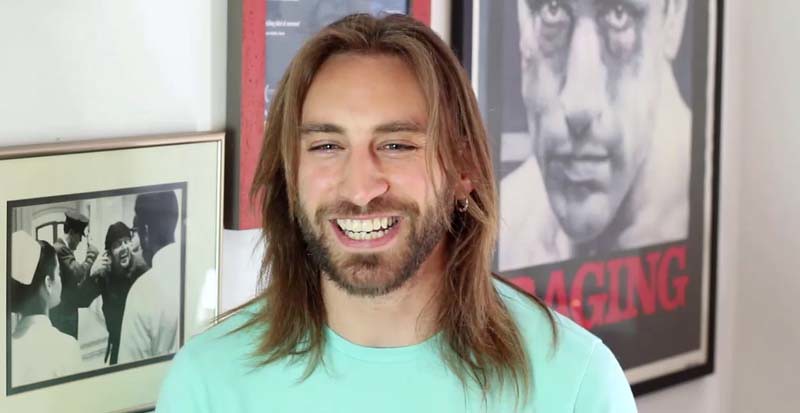
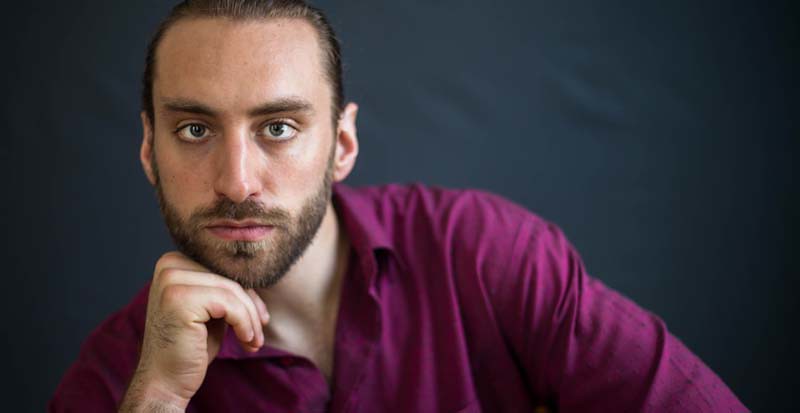
Ian Hayes: the First Year in the Acting Program Q: Ian, what did you think the Meisner technique was before you started your training at the studio? A: All I really heard about it was that this is a bunch of repetition and somehow that made you a better actor. I really had no idea. When I decided to come to this school, I talked about it with some people that had done some other acting training. Only a few of them had ever just taken the first year now, but I know and they were like, “It's amazing. Really, the repetition it really teaches you what it is you offer,” or something like that. I don’t know, I thought somehow that was the basis for it. Now, the way I understand it is that the Meisner technique is really a way for you to learn how truthfully do and that repetition is having just the tip of the iceberg. It’s more of a tool as opposed to the technique. Meisner teaches you how to do it in a healthy way, which is what I love about it since it is all rooted in the imagination, which is darkness and it's always changing. I love that about the technique because I thought that I had to be very damaged human being to be a good actor, to have the experience to draw from and Meisner says, “No. As long as you have that healthy imagination, you can put yourself in very traumatizing or joyful experiences,” and like, “That's really what you need to be an actor.” That’s how I see it now. It’s a way back to your inner child to use your imagination and strangely, use your imagination to do it truthfully. Q: Why did you decide to study at Maggie Flanigan Studio? There are a lot of different Meisner studios, different teachers, why did you decide this place was the best place for you? A: Two reasons. I eventually went to a larger college. I came from a very small town and I thought I wanted that, which I think did me well, but I hated being a number. I did not complete college and I think, that had a lot to do with it. When I knew that I wanted something, a more rigorous training in acting, a big part about it for me was the community. Will the teacher know who I am? Will they know what I’m late? Will I know the other students? Will people care if I am there or if I'm doing what I'm supposed to be doing or not? Because at the school I was at, I didn’t get that at all. I kind of just went, “Well, screw everyone." I’m much younger, then. Reason two is honestly just when I met with Charlie. I was looking at a Michael Chekhov studio as well in Boston. It’s the only serious studio in Boston. I met with Charlie in my initial interview and he told me the schedule. I went back to the teacher and head of that Chekhov studio and- who actually I later found out had worked with Maggie years ago. He also teaches the Meisner Technique. So I really- I believe in it and I think Chekhov is the perfect-- Anyways, when I told them Charlie's schedule, this guy said, "There is no way you're telling me that this guy does nine hours for this every week.” I said, "Well, yes.” He was like, "There’s no way it's possible." To me, I said, "Well, okay. It is because that's what he does, therefore, I definitely want to go to this guy." Because he obviously takes it much more seriously and that’s just what right to me. I was like, "I'm definitely going to learn a lot more from Charlie than the other guy who won't give that to his students or to the craft, teaching how to act.” Those are the two big reasons for me. Q: Now that you're done with your first year, what did you learn about yourself this year that was a surprise or that changed you? A: For me, honestly, I learned that I could finish something on my own. That was a big thing because I didn't finish college, a typical academic college. I think the biggest thing, honestly, is that my emotional well, so to speak, or spectrum is way more grand than I thought. I thought that just from different life experiences that I've kind of lost my ability to cry, my ability to really feel sad or empathy or be vulnerable in certain situations. This program told me that I'm still a human. That has been huge for me and has really improved my relationships with myself and with those closest to me. That is hugely gratifying and fortunate. The other thing, too, I guess, that I found out what that hard work means. I found out that I'm not afraid to fail, which- I don't want to say I didn't know about myself because I tried a lot of different things. Obviously, things didn't work out as I had maybe hoped, but to fail day in and day out and walk away alive and okay is also huge for me. This program really puts you through that gauntlet and through that trial and tribulation. I feel very happy that I can do it. Q: What's it like to have a bad day in acting class? A: It's still worst, but really, the only way to have a bad day in acting class, is when you don't do the work outside of class. That's why it's the worst because you have no one to blame except for yourself, which is in one side, it feels awful, but then in the other side, well, that's something I can fix. It's not hopeless. It's not out of my control. It's when you know you didn't do the work and at this program, which I love about it, there's no hiding. You can't slip through and slide through things. It really teaches you how to be accountable for yourself. The worst days for me were when I had to deal with that about myself. Letting yourself down really is the worst. You think it's letting Charlie down, but in the end, it's really you let yourself down. That's the worst part about it. Q: On the opposite, what is it like to have a breakthrough in class or a good day? A: It's usually very emotional and it's intense. It just means that you let yourself release. I don't know. It feels amazing. I don't know. It feels so many things. It's very intangible, but it’s a very intense experience. Then, you come out and you're alive and you're still yourself. It was imaginary and you can just kind of sit there and go, "Yes. I did that. I went there." Also, it's just a very educational experience because you did the things right outside of class that allowed you to go there. It connects dots. That is also huge, gratifying and enlightening experience when you have a good day and you’re like, "Wow. Okay, I had a good day because X, Y, and Z. I did X, Y, and Z. Now, I understand how that works and how these pieces fit together to bring about this experience.” Maggie Flanigan Studio 153 W 27th St #803 New York, New York 10001 +1 917-789-1599 www.maggieflaniganstudio.com/ goo.gl/maps/oxqqExybwL32 plus.google.com/112291205845820496849 https://flic.kr/p/286a82m

professional acting program in new york - maggie flanigan studio


Learn more about the Maggie Flanigan Studio and why many actors consider this program to be the best in New York and the U.S. by visiting the studio website 9 URL ). Admission to the studio is by interview only, so interested students should contact the studio to arrange an interview. Maggie Flanigan Studio 153 W 27th St #803 New York, New York 10001 +1 917-789-1599 www.maggieflaniganstudio.com/ goo.gl/maps/oxqqExybwL32 plus.google.com/112291205845820496849 https://flic.kr/p/297cCw3

new york acting programs - maggie flanigan studio - Ian Hayes 02


Ian Hayes: the First Year in the Acting Program Q: Ian, what did you think the Meisner technique was before you started your training at the studio? A: All I really heard about it was that this is a bunch of repetition and somehow that made you a better actor. I really had no idea. When I decided to come to this school, I talked about it with some people that had done some other acting training. Only a few of them had ever just taken the first year now, but I know and they were like, “It's amazing. Really, the repetition it really teaches you what it is you offer,” or something like that. I don’t know, I thought somehow that was the basis for it. Now, the way I understand it is that the Meisner technique is really a way for you to learn how truthfully do and that repetition is having just the tip of the iceberg. It’s more of a tool as opposed to the technique. Meisner teaches you how to do it in a healthy way, which is what I love about it since it is all rooted in the imagination, which is darkness and it's always changing. I love that about the technique because I thought that I had to be very damaged human being to be a good actor, to have the experience to draw from and Meisner says, “No. As long as you have that healthy imagination, you can put yourself in very traumatizing or joyful experiences,” and like, “That's really what you need to be an actor.” That’s how I see it now. It’s a way back to your inner child to use your imagination and strangely, use your imagination to do it truthfully. Maggie Flanigan Studio 153 W 27th St #803 New York, New York 10001 +1 917-789-1599 www.maggieflaniganstudio.com/ goo.gl/maps/oxqqExybwL32 plus.google.com/112291205845820496849 https://flic.kr/p/27NvsR4